Olu Dara biography
Date of birth : 1941-01-12
Date of death : -
Birthplace : Natchez, Mississippi, U.S.
Nationality : American
Category : Arts and Entertainment
Last modified : 2011-11-08
Credited as : Singer, guitarist,
0 votes so far
Dara took the long, slow route to solo stardom. A mainstay on the avant-garde jazz circuit in the 1960s and 1970s, as well as the leader of his own blues-oriented orchestras, the multifaceted musician did not release his first solo album until 1998. At that time, he was 57 years old. Dara told Jazziz, "I didn't come from a situation where you were record-oriented. I was just a guy who was song-and-dance man, a stage man. I didn't come to New York to record, to become a musician, so I wasn't in that mindset."
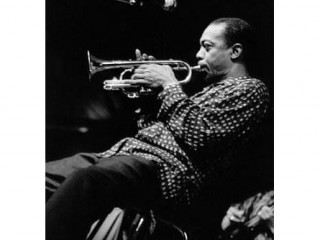
Dara displayed a talent for music and performance at an early age. His father was a popular singer, his uncles were traveling minstrels, and his great-uncles performed in the Rabbit's Foot and Silas Green touring carnivals. Dara first learned to play piano and clarinet, then took up the cornet. He was performing by age seven and touring by age ten. Dara continued to play trumpet and cornet throughout high school and at Tennessee State University, where he entered as a pre-med student but also joined the marching band. When he switched his major to music, he was too late to schedule any of the top-notch classes, so he dropped out of college and entered the United States Navy.
Traveling with the Navy, Dara not only played trumpet regularly but was exposed to a wide variety of rhythms and sounds from around the world. "I heard a whole lot of stuff in the navy," he told Down Beat in 1982. "I think it made me complete."
Dara was discharged in New York in 1964 and decided to stay in the city, although he did not play music for several years. Only after encountering several high school, college, and Navy friends, including drummer Freddie Waits, saxophonist Hamiet Bluiett, and vocalist Leon Thomas, did he again pick up the horn, focusing primarily on the cornet. Switching instruments allowed him to develop his singular style. "When I played the trumpet, I sounded like all the other trumpet players," Dara told Down Beat in 1998. "When I picked up the cornet, I went right back to the way I used to play. I don't think I play any different now than I did when I was 12 years old." His tone is often compared to Louis Armstrong or Roy Eldridge, and his organic channeling of the blues often reminds listeners of Taj Mahal. Dara is largely regarded as one of a kind. "Olu can play with one note what most people can only play in a whole solo," cornetist Butch Morris told Jazziz. "He also understood the mutes better than most, and how to deflect the sound."
Although his penchant was still for the blues-oriented music of his youth, as well as the multicultural sounds from his navy days, Dara became a fixture in the city's avant-garde loft jazz scene, where talented horn players were a hot commodity. It was during this time that he adopted his current name, given to him by a saxophonist who was also a Yoruba priest. One of his earliest steady gigs was with legendary jazz drummer Art Blakey, who was the first to encourage Dara to follow his own path. "'Look, this s**t is boring to you, ain't it?'" Dara recalled Blakey telling him, according to Down Beat. "'Look, go out and do what you want to.'" Given such license, Dara proceeded to sing the impromptu, storylike lyrics that are a staple of his solo releases and blow blues-inspired trumpet riffs.
This experience inspired Dara to set off on his own, forming first the Okra Orchestra, named after his favorite vegetable, and then the Natzchezsippi Dance Band. "The adventurous jazz I was playing wasn't my music. It's like having a job," Dara told the Boston Herald in 2001. "You may be working in an office and not want to be there, but you're there until you find something that you're comfortable with. That's why I formed my own band."
Dara continued to record and perform with a variety of other musicians, many of them at the forefront of the avant-garde, including Bluiett, Oliver Lake, David Murray, Henry Threadgill, Bill Laswell and James "Blood" Ulmer. He recorded two solo albums, neither of which was ever released. "I think I may have been a little too visionary," he told the New York Times. He also began to score and peform music for the theater. He has worked with playwright August Wilson, choreographer Diane McIntyre, and poet Rita Dove, among others, and he even performed in the musical Hair. In 1995 he acted in director Robert Altman's film Kansas City and contributed to the soundtrack. In the late 1980s Dara also began accompanying Cassandra Wilson, and is featured on three of the highly regarded vocalist's albums. In the 1990s, he also accompanied his son Nasir Jones, a hip-hop artist who records under the name Nas.
Honing his engaging, storytelling vocal style throughout the 1980s and 1990s, Dara finally released a solo album, In the World: From Natchez to New York, in 1998 to widespread critical acclaim. In the World was followed by Neighborhoods in 2001, and both albums made Dara's name not only as a multitalented musician, but as a captivating lyricist. "Not many artists release their debut as a leader several decades into their career, and fewer do with as stunning an artistic turn-about as Olu Dara, whose 'In the World from Natchez to New York' established the cornet player as a singer, guitarist, and top-notch storyteller," wrote Billboard's Steve Graybow in 2001. "Dara's 'Neighborhoods' follows in the footsteps of that auspicious release, liberally mixing blues and jazz with humanistic storytelling in the African tradition." Music is, after all, a form of storytelling, Dara pointed out in a 1996 New York Times interview. "When we get together, there's no words thrown away, no idle talk," he recalled of his visits with Nas. "We'll sit down, play drums and conversate musically."
Whether playing with an avant-garde ensemble, heading his own orchestra, scoring for the theater, or playing solo, Dara's approach has always been spontaneous and improvisational, rooted in the the blues and gospel traditions of his youth. "The whole 15 years, I think we've spent maybe a total of eight hours [practicing] altogether," Dara told Down Beat of his long-time ensemble, which includes bassist Alonzo Gardner, guiarist Kwatei Jones Quartey, drummer Greg Bandy, and conga player Acosta Musamba. This approach is long-ingrained. Dara added, "If you go to a doctor's office, he doesn't say, 'Well, let me go home and practice how I'm going to put this bandage on you.' That's the way I look at music.... I never practice the cornet. I never did. I was brought up that way. My teacher never said go home and practice. He said, how can you practice life? Music is life! Always go in fresh."
Selected discography:
-In the World: From Natchez to New York Atlantic, 1998.
-Neighborhoods Atlantic, 2001.